Engineering the Ideal Dormer: Converting Victorian and 1930s Houses in the UK
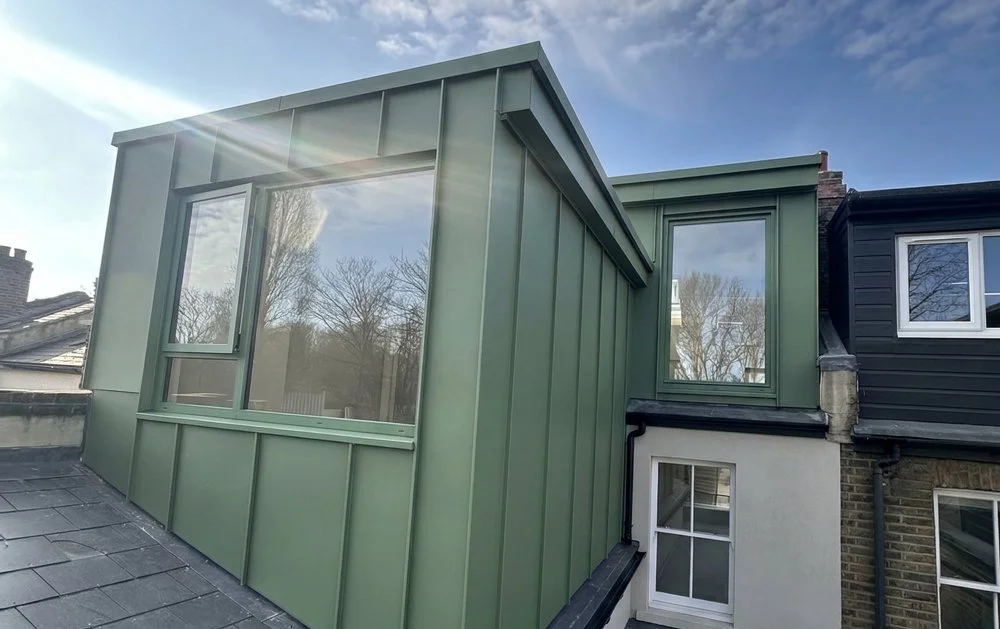
Coloured zinc-cladding
In the UK housing market, Victorian terraces and 1930s semi-detached properties represent the primary candidates for high-yield spatial expansion. However, the structural approach required for each is distinct. At JPEC Lofts, we approach these projects through a lens of technical precision, ensuring that a Dormer loft conversion is not merely an ‘add-on’ but a seamless structural integration. Whether navigating the steep pitches of a 19th-century roof or the hipped complexities of a pre-war semi, understanding the engineering constraints is the first step toward a successful build.
The Victorian Perspective: Navigating the L-Shaped Dormer
Victorian properties are often characterised by their narrow footprints and ‘outrigger’ rear additions. For these structures, a standard rear dormer is frequently expanded into an L-shaped dormer. This involves two distinct sections: one over the main roof and one over the rear extension.
Technical Considerations for Victorian Builds:
Structural Load Bearing: Victorian rafters were designed for light slate loads. Introducing a modern dormer requires significant reinforcement. JPEC Lofts engineers calculate the exact specifications for RSJs (Rolled Steel Joists) to bridge the span between party walls.
Headroom Optimisation: Some Victorian lofts have a restricted ridge height. To achieve the required 2.2 metres of standing room, we can employ a ‘floor drop’ technique, lowering the ceilings of the rooms below.
Conservation Compliance: If the property sits within a conservation area, external cladding must match the existing aesthetic. Check the UK Planning Portal for specific volume limits, which are strictly capped at 40 cubic metres for terraced houses under Permitted Development.
The 1930s Semi: Volume and Gable Transitions
Unlike the Victorian era, 1930s architecture often features hipped roofs, sloping on three or four sides. This necessitates a Hip-to-Gable conversion before the dormer can be installed. By extending the sloping side of the roof into a vertical wall, we maximise the internal volume available for a Dormer loft conversion.
Engineering Requirements for 1930s Semi-Detached Houses:
Staircase Geometry: The 1930s layout usually features a centralised landing. Precise alignment is required to ensure the new staircase meets GOV.UK Building Regulations Part K, which mandates specific pitch and headroom.
Insulation and Thermal Performance: JPEC Lofts integrates high-performance PIR insulation boards within the dormer cheeks and roof to meet Part L of the building regulations, ensuring the new space is thermally efficient.
Critical Regulatory Infrastructure
Regardless of the era, all JPEC Lofts projects adhere to rigorous safety standards:
Fire Safety (Part B): Converting a loft into a third storey requires FD30 fire-rated doors and a mains-linked smoke alarm system.
Steelwork Placement: We ensure weight is distributed down to foundation-bearing walls, avoiding stress on non-load-bearing internal partitions.
Why not book a Technical Consultation?
Structural integrity and regulatory compliance are the foundations of every project at JPEC Lofts. Converting a period property requires more than just additional space; it requires a precise engineering strategy to ensure the longevity of the building.
If you are planning a Dormer loft conversion for a Victorian terrace or a 1930s semi-detached home, ensure your project is handled by specialists who understand the specific structural demands of these eras.
Contact the JPEC Lofts technical team today to arrange a site-specific feasibility assessment and begin your structural expansion.